Bitcoin vs. Quantum Computing: Will the Fortress of Crypto Crumble?
As quantum computing accelerates, the fear of a "Quantum Apocalypse"—where Bitcoin’s security is rendered useless—has become a hot topic. Is Bitcoin truly defenseless against quantum power, or is it an adaptable challenge it can overcome? Let's analyze both sides of the debate.
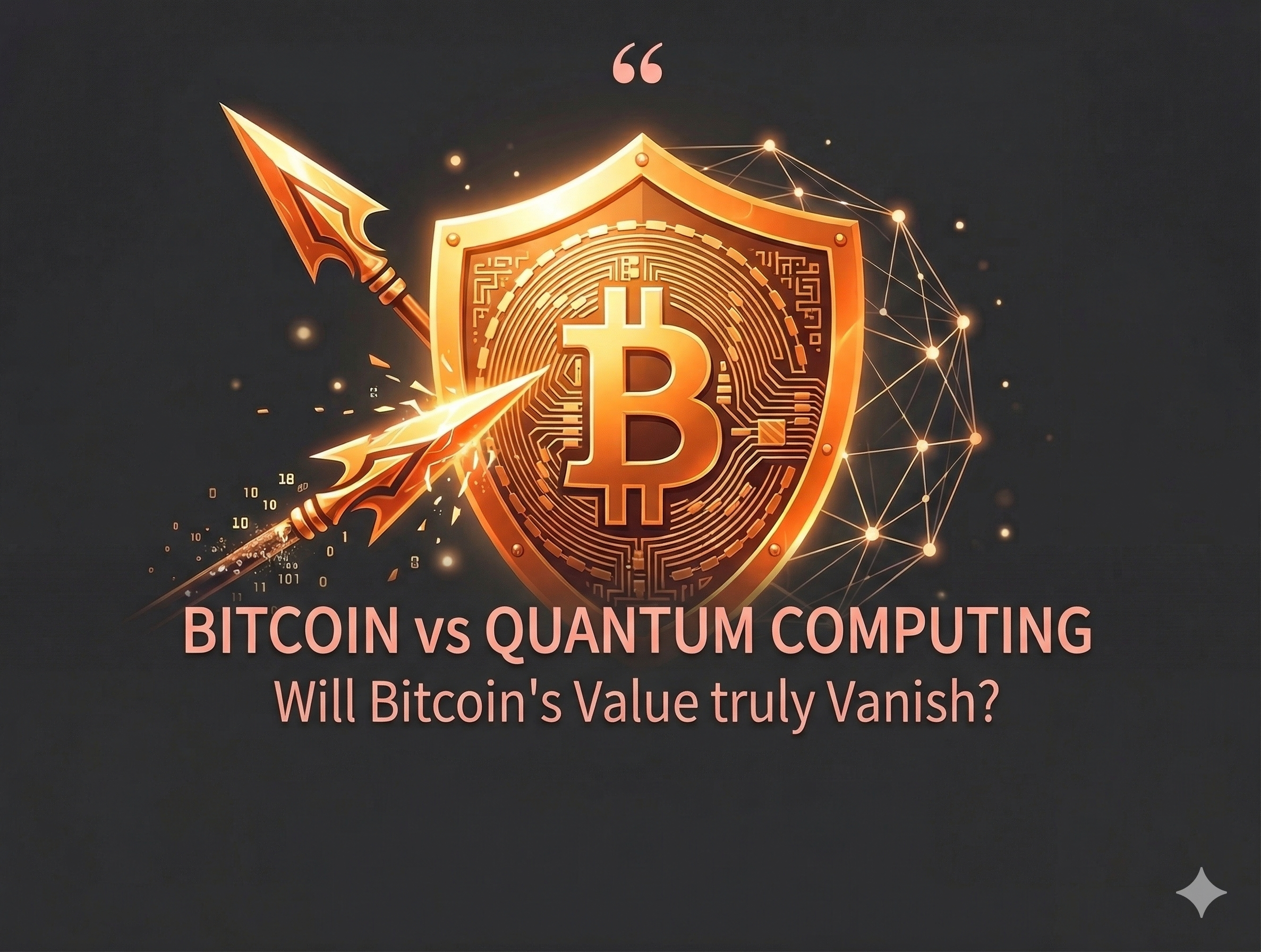
1. The Threat: "Bitcoin’s Encryption is Bound to Break"
The core argument of skeptics is that the cryptographic algorithms Bitcoin currently uses are inherently vulnerable to the immense processing power of quantum computers.
- The Fear of Shor’s Algorithm: Quantum computers can utilize "Shor’s Algorithm" to solve the Elliptic Curve Cryptography (ECDSA) used by Bitcoin at incredible speeds. Theoretically, this would allow someone to derive a private key from a public key and steal funds.
- Mining Monopoly Risks: Using "Grover’s Algorithm," a group with a quantum computer could potentially trivialize mining difficulty, gaining 51% control of the network and shaking the foundations of decentralization.
2. The Defense: "Bitcoin is an Evolving Protocol"
Conversely, the Bitcoin community and developers argue that there is plenty of time before quantum computers become a practical threat, and that Bitcoin is designed to upgrade.
- Introducing Post-Quantum Cryptography (PQC): Bitcoin can change its cryptographic algorithms via software updates (soft forks). Transitioning to "lattice-based cryptography," which remains secure against quantum attacks, would preserve the network's integrity.
- Technical Gap and Cost: Current quantum computers are far from having the necessary qubit count or error-correction rates to crack Bitcoin. Most experts predict it will take decades to develop a "perfect" quantum computer capable of such a feat.
- Address Protection: Bitcoin addresses are further protected by hash functions. If users avoid reusing addresses, the window for a quantum computer to extract a private key during a transaction becomes physically too small to exploit.
If Quantum Computing Arrives, Will Bitcoin’s Value Truly Vanish?
Beyond the technical possibility of "hacking," if a quantum computer were to emerge today, would Bitcoin’s economic value actually drop to zero? This is not just a question of code, but of social consensus and evolution.
1. The Value Collapse Theory: "A Cracked Vault is Worthless"
Bitcoin’s value stems from the absolute security that "no one can open my wallet but me."
- Breakdown of Trust: If a quantum computer could forcibly open the wallets of major holders (Whales) or Satoshi Nakamoto, the "immutability of ownership"—Bitcoin’s core value—would be shattered.
- Financial Panic: Assets without guaranteed security lose their function as a store of value, potentially leading to an immediate "bank run" and a total price collapse.
2. The Value Retention Theory: "Bitcoin is a Network, Not Just Code"
Viewing Bitcoin’s value solely through a single cryptographic formula is a narrow perspective.
- The Power of Global Consensus: Bitcoin is a massive ecosystem involving millions of users, miners, and nodes. If a quantum threat becomes real, participants will immediately agree on a "Quantum-Resistant Update" to protect their wealth. Bitcoin is a set of rules (software), not a rigid machine (hardware).
- Not Just a Bitcoin Problem: If a quantum computer can crack Bitcoin, the global banking system, military secrets, and government infrastructures would fall first. Bitcoin might actually be the first to upgrade to quantum resistance, making it a safer haven than traditional systems.
3. The Shield of the "Soft Fork"
The Bitcoin community has a history of solving technical hurdles through upgrades. Before quantum computers become viable, developers will introduce new address formats. Once users move their Bitcoin to "Quantum-Resistant Addresses," quantum computers will be left looking at old, empty vaults.
Conclusion: Value Comes from Consensus, Not Just Math
Bitcoin’s value doesn't just come from an equation; it comes from the global promise that "no one can print it at will, and everyone can verify it."
Quantum computing attacks the means (cryptography), not the promise (value). Just as internet security evolved, Bitcoin will simply change into a more advanced "Quantum Shield." Therefore, the era of quantum computing is likely to be a turning point where Bitcoin proves itself as an even more sophisticated and "complete" digital asset.
'Investing & Finance' 카테고리의 다른 글
| 2026 Bitcoin Price Outlook: Breaking New All-Time Highs or a Brutal Correction? (0) | 2026.04.08 |
|---|---|
| 2026년 비트코인 가격 전망: 전고점 탈환인가, 잔인한 조정장인가? (0) | 2026.04.08 |
| 양자컴퓨터 시대, 비트코인의 가치는 정말 증발할까? : 기술보다 중요한 '신뢰'의 향방 (0) | 2026.04.07 |
| 비트코인 vs 양자컴퓨터: 암호화 화폐의 성벽은 무너질 것인가? (0) | 2026.04.07 |
| Bitcoin and the Global Market: Digital Gold or Just Another Tech Stock? A Comparative Correlation Analysis (0) | 2026.04.06 |


